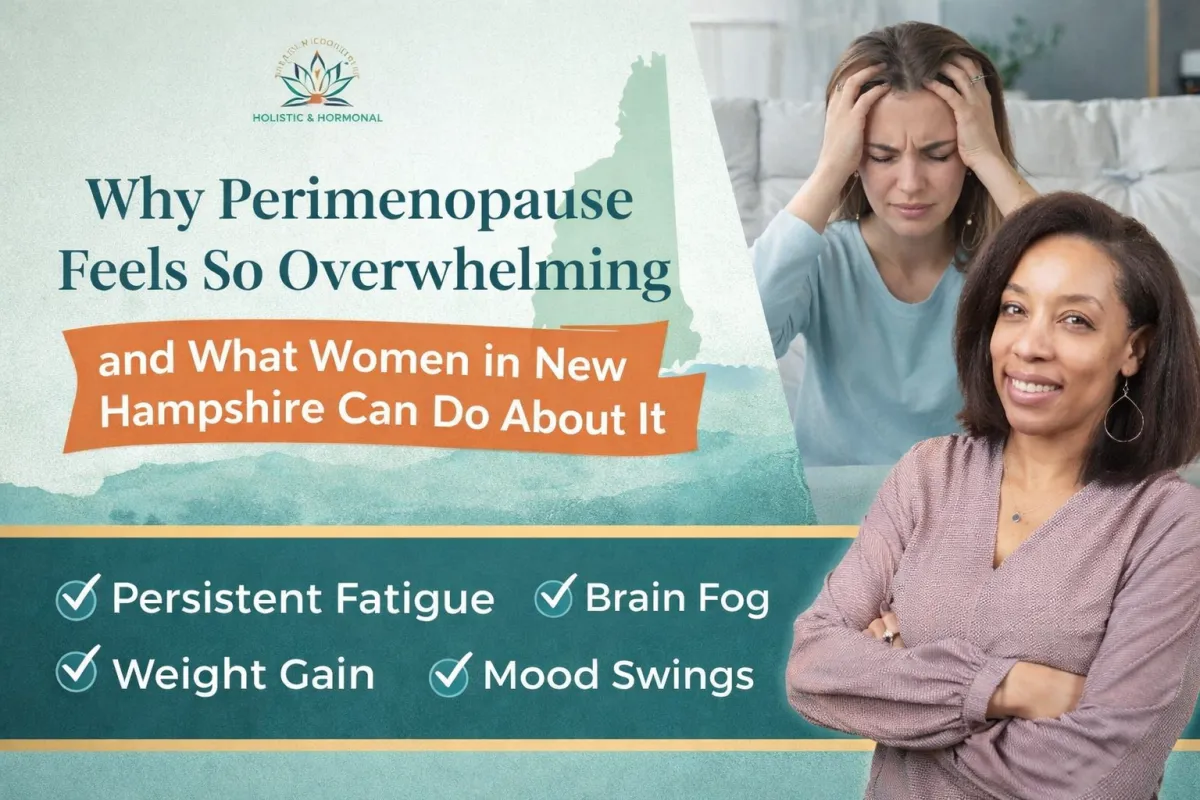
Why Perimenopause Feels So Overwhelming, and What Women in New Hampshire Can Do About It
Why So Many Women Feel “Off” in Their 40s
If you’ve been feeling unlike yourself lately, you are not imagining it.
Many women in their late 30s and 40s begin to notice subtle, then not-so-subtle changes. Energy drops. Sleep becomes unpredictable. Weight shifts without explanation. Mood changes feel harder to control. Brain fog makes even simple tasks feel overwhelming.
You may have been told this is just aging. Or that your labs look “normal.” Or that stress is the problem.
But here is the truth: your body is changing, and those changes deserve real attention, not dismissal.
At Holistic & Hormonal, we see this every day. Women who are doing everything right, yet still feel exhausted, anxious, and disconnected from themselves.
This is often the beginning of perimenopause.
What Is Perimenopause, Really?
Perimenopause is the transitional phase leading up to menopause. It can begin as early as your mid-30s and often lasts several years.
During this time, hormone levels do not simply decline. They fluctuate.
Estrogen rises and falls unpredictably. Progesterone often drops earlier and more steadily. Cortisol, your stress hormone, can become dysregulated. Insulin sensitivity may shift.
These changes impact nearly every system in your body.
This is why symptoms can feel so widespread and confusing.
Common Symptoms of Perimenopause
Many women expect hot flashes. But perimenopause is much broader than that.
You might be experiencing:
Persistent fatigue, even after a full night’s sleep
Brain fog or difficulty concentrating
Increased anxiety or irritability
Trouble falling or staying asleep
Weight gain, especially around the abdomen
Low libido
Irregular or heavier periods
Headaches or migraines
Joint pain or inflammation
These symptoms are real. And they are connected.
Why Conventional Care Often Falls Short
Many women in New Hampshire come to us after feeling dismissed in traditional medical settings.
Here is why that happens:
1. Lab testing is often limited
Standard labs may not capture hormone fluctuations or functional imbalances.
2. Symptoms are treated in isolation
You may be offered sleep medication, antidepressants, or told to “wait it out.”
3. Root causes are overlooked
Hormones do not operate in isolation. Gut health, stress, inflammation, and metabolism all play a role.
Without addressing the full picture, symptoms persist.
The Functional Medicine Difference
At Holistic & Hormonal, the focus is not just on managing symptoms. It is on understanding why your body is struggling.
Functional medicine looks at:
Hormone patterns over time, not single snapshots
Cortisol rhythm and stress response
Gut health and inflammation
Nutrient deficiencies
Blood sugar regulation
Detoxification pathways
This allows for a personalized approach.
Because no two women experience perimenopause the same way.
Why You Feel So Tired All the Time
Fatigue is one of the most common complaints in perimenopause.
And it is not just about sleep.
Several factors are often involved:
Hormonal imbalance
Low progesterone can disrupt sleep quality. Estrogen fluctuations can affect energy regulation.
Cortisol dysregulation
Chronic stress can lead to a flattened or erratic cortisol pattern, leaving you wired at night and exhausted during the day.
Blood sugar instability
Spikes and crashes in glucose can drain your energy and increase cravings.
Nutrient depletion
Iron, magnesium, and B vitamins are often low in midlife women.
Fatigue is not a personal failure. It is a signal.
Brain Fog Is Not “Just in Your Head”
Many women describe feeling like they cannot think clearly anymore.
This can show up as:
Forgetfulness
Difficulty focusing
Losing words mid-sentence
Feeling mentally slow
Estrogen plays a key role in brain function, including memory and cognition.
When levels fluctuate, your brain feels it.
Inflammation, poor sleep, and blood sugar swings can make this even worse.
The good news is that brain fog is often reversible with the right support.
Why Weight Gain Feels So Frustrating
You may be eating the same way you always have. Exercising consistently. Yet the scale continues to rise.
This is incredibly common.
Hormonal changes can:
Slow metabolism
Increase insulin resistance
Promote fat storage, especially in the abdomen
Increase cravings and hunger signals
Restrictive dieting often makes this worse.
The goal is not to eat less. It is to support your metabolism in a smarter way.
Anxiety, Mood Changes, and Emotional Overwhelm
If you have been feeling more anxious, irritable, or emotionally sensitive, there is a physiological reason.
Hormones influence neurotransmitters like serotonin and GABA.
When estrogen and progesterone shift, your emotional resilience can shift too.
Add in poor sleep and chronic stress, and it can feel overwhelming.
This is not a weakness. It is a biochemical change.
What Actually Helps During Perimenopause
The most effective approach is not a quick fix. It is a layered, personalized strategy.
Here is what truly makes a difference:
1. Stabilizing Blood Sugar
Balanced meals with protein, healthy fats, and fiber can dramatically improve energy, mood, and cravings.
2. Supporting Sleep
Consistent sleep routines, nervous system regulation, and targeted nutrients help restore deeper rest.
3. Managing Stress Physiology
This goes beyond “relaxing.” It involves regulating cortisol through lifestyle and targeted support.
4. Optimizing Nutrition
Many women need more protein, minerals, and anti-inflammatory foods than they realize.
5. Targeted Hormone Support
For some women, bioidentical hormone therapy can be a powerful and safe tool when used appropriately and monitored carefully.
6. Advanced Testing
Functional labs like DUTCH testing and comprehensive bloodwork help uncover root causes.
You Do Not Have to Navigate This Alone
One of the most common things we hear from women is this:
“I thought it was just me.”
It is not.
And more importantly, you do not have to figure this out by yourself.
At Holistic & Hormonal, we provide structured, supportive care designed specifically for this phase of life.
How Holistic & Hormonal Supports Women in New Hampshire
Because care is virtual, women across New Hampshire can access personalized support without long wait times or limited local options.
Here is how we help:
Root & Rise Hormone Clinic
Ongoing care that combines bioidentical hormone therapy with functional lab monitoring and personalized guidance.
5 to Thrive Program
A deeper, comprehensive reset addressing hormones, gut health, metabolism, and stress over five months.
From Foggy to Fierce Masterclass
An accessible starting point for women who want clarity, education, and actionable steps.
Each program is designed to meet you where you are.
When Should You Seek Support?
If you are experiencing symptoms that interfere with your daily life, it is time.
You do not need to wait until things get worse.
You do not need to accept feeling exhausted, foggy, or disconnected.
Early support often leads to better outcomes and faster relief.
A New Way Forward
Perimenopause is a natural phase. But suffering through it is not required.
With the right support, many women experience:
Steadier energy
Clearer thinking
Improved sleep
Balanced mood
Sustainable weight changes
A renewed sense of control over their health
This is not about becoming someone new.
It is about feeling like yourself again.
Author Bio
Dr. Whitney Elsesser is a Doctor of Nursing Practice, Certified Nurse Midwife, and Functional Medicine Provider who specializes in helping women navigate midlife hormonal changes with science-backed, compassionate care. Through her virtual practice Holistic & Hormonal, she helps women across the U.S. address perimenopause and menopause through root-cause medicine, education, and empowerment.
To learn more, visit https://holisticandhormonal.org/